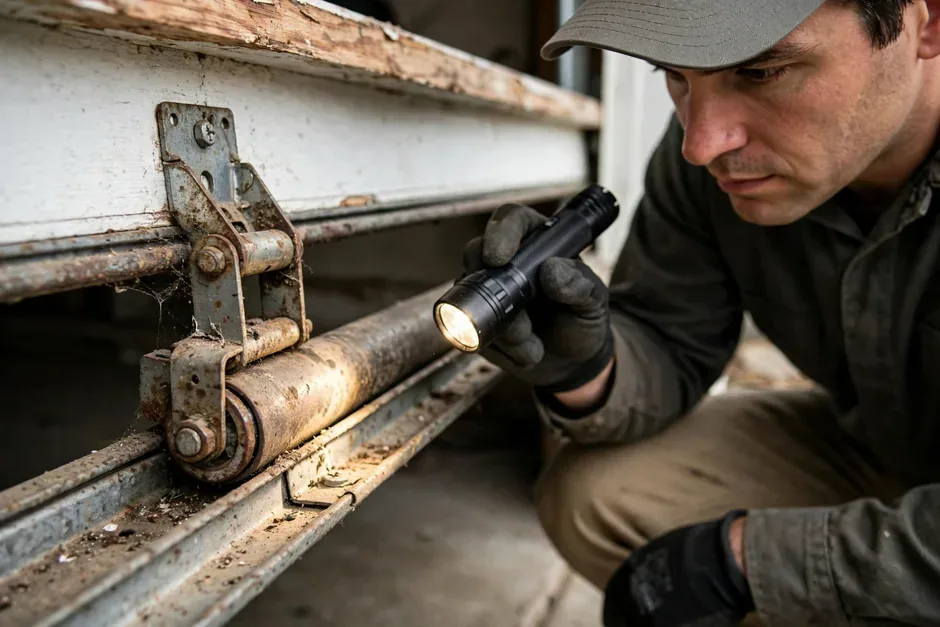
A garage door that bangs, grinds, or squeals every morning is telling you something. In most Gallatin homes, the noise comes from worn rollers, dry hinges, loose hardware, or the opener itself. Here's how to match the sound to the cause, what you can safely fix, and when to call us.
What does each garage door sound mean?
Different sounds point to different problems. Here's what we hear most often on service calls:
- Squeaking: usually dry metal hinges or rollers crying out for lubrication. It often gets worse during dry spells.
- Grinding: typically worn metal rollers or debris caught in the track. This one tends to get worse, not better, with time.
- Rattling or vibration: loose nuts, bolts, or track brackets. Doors shake themselves loose over thousands of cycles.
- Loud bang: often a broken torsion spring. If the door suddenly won't open or only opens a few inches, stop and call a pro.
- Popping on cold mornings: steel panels and hardware contracting in the cold. Some popping is normal, but new or worsening pops deserve a look.
- Humming with no movement: the opener straining against a stuck door or a broken spring. Stop using it and get it checked.
Why is my garage door louder in winter or summer?
Middle Tennessee weather is rough on garage doors. Humid summers speed up rust on springs, cables, and hinges, which turns smooth movement into grinding and squeaking. Winter cold snaps do the opposite: steel contracts, lubricant thickens, and tired springs are most likely to snap on the coldest mornings of the year. If your door is always loudest in January or August, the weather isn't the whole story, it's just exposing wear that was already there.
Metal vs. nylon rollers: which is quieter?
Nylon rollers with sealed bearings run noticeably quieter and smoother than old-style metal rollers. Metal rollers are durable, but they rattle and grind as they wear, and they're the single biggest noise culprit we find in Gallatin garages. If your door sounds like a freight train, roller replacement is one of the best upgrades you can make for the money.
What does a garage door tune-up include?
A proper tune-up quiets a door down and catches problems before they turn into breakdowns. Here's what ours covers:
- Tighten all hardware: every nut, bolt, and track bracket gets checked and snugged up.
- Lubricate moving parts: hinges, rollers, and springs get a silicone-based lubricant. The tracks just get wiped clean, lubricant on the tracks attracts grit.
- Inspect springs and cables: we look for rust, fraying, and fatigue on the torsion spring and lift cables, the parts you should never touch yourself.
- Check door balance: a balanced door moves smoothly and doesn't strain the opener.
- Test safety systems: photo eyes and the auto-reverse feature get tested so the door is quiet and safe.
What should I stop doing right now?
- Don't force a noisy, stuck door. Forcing it can bend tracks, snap cables, or burn out the opener.
- Don't use WD-40 as a lubricant. It's a water displacer and solvent, not a long-term lubricant. It strips existing lube and the noise comes back worse. Use a silicone-based garage door lubricant instead.
- Don't touch springs or cables. They're under high tension and can cause serious injury. This is always pro work.
- Don't ignore a sudden bang. If the door bangs and then won't open evenly, something broke. Keep using it and you'll likely damage the opener too.
When should I call Gallatin Garage Door Rescue?
Call us at (615) 637-1039 if the noise is getting worse, started suddenly, or comes with uneven movement. We handle roller replacement, spring replacement, and tune-ups across Gallatin, including Kennesaw Farms, and you'll get an upfront price before any work begins. For more homeowner guides, browse our blog.
Frequently Asked Questions
Why does my garage door bang or pop on cold mornings? Steel contracts in the cold, which can make panels and hardware pop as the door moves. Some noise is normal, but if it's new or getting louder, have the springs and hardware checked before a cold snap snaps a tired spring.
Will new rollers make my garage door quieter? Usually, yes. Worn metal rollers are one of the biggest noise culprits, and upgrading to nylon rollers with sealed bearings often makes a dramatic difference.
Is a noisy garage door dangerous? It can be. Grinding or banging can signal worn rollers, loose hardware, or a failing spring. If the door suddenly gets much louder or won't open evenly, stop using it and call (615) 637-1039.
How often should I lubricate my garage door? A light silicone-based lubrication of the hinges, rollers, and springs once or twice a year keeps things quiet. Skip the tracks, just wipe them clean.
Can I make an old chain-drive opener quieter? Tightening the hardware and keeping the chain properly adjusted helps, but chain drives are inherently louder than belt drives. If noise bothers you and the opener is aging, a belt-drive replacement is worth considering.